
Search
News & Blog
Categories
Have Any Question?
Do not hesitage to give us a call. We are an expert team and we are happy to talk to you.
 +84 914 544 660 (WhatsApp)
 info@vietnamcatholictours.com
Our Lady of La Vang in 1900: The First La Vang Pilgrimage Congress
Our Lady of La Vang in 1900: The First La Vang Pilgrimage Congress
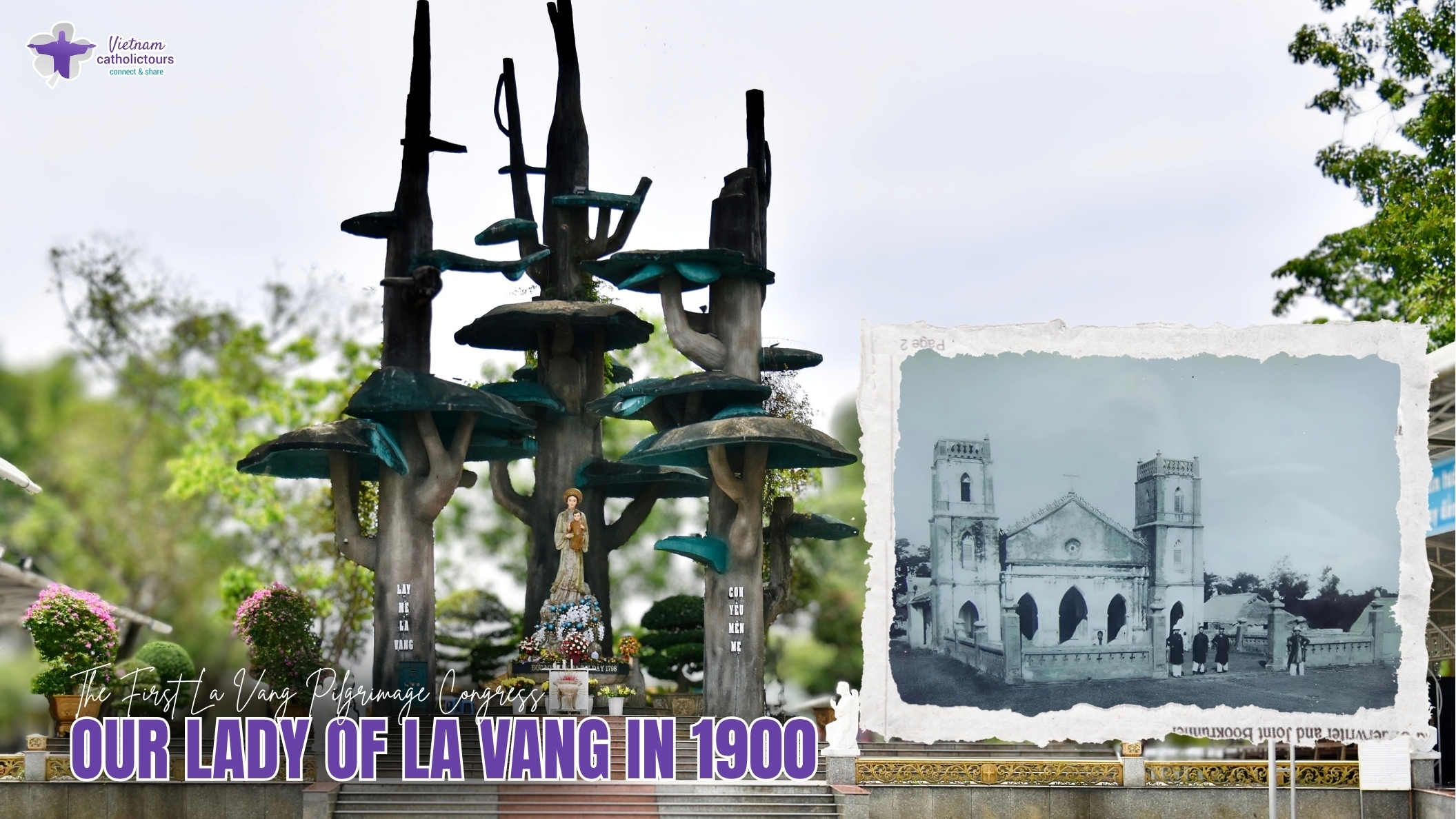
Reference: This article is prepared by Vietnam Catholic Tours based on historical materials published by the Archdiocese of Hue, particularly “The First La Vang Pilgrimage Congress (1900) – Inauguration of the Ngói Church (Trần Quang Chu – Edited by the Communications Committee of the Archdiocese of Hue)”
The year 1900 occupies a special place in the history of Our Lady of La Vang. It witnessed the First La Vang Pilgrimage Congress, the inauguration of the historic Ngói Church, and the establishment of several pilgrimage traditions that would become part of La Vang’s enduring spiritual heritage.
Based on historical materials preserved by the Archdiocese of Hue, this article presents the principal events and historical relics associated with La Vang in 1900.
1. The First La Vang Pilgrimage Congress
The First La Vang Pilgrimage Congress was celebrated on 8 August 1900.
According to the historical report reproduced by the Archdiocese of Hue, pilgrims began arriving on the evening before the celebration. Some travelled nearly 150 kilometres, while those from neighbouring parishes gathered before midnight so they could participate in the procession at dawn.
The report records that preparations for the procession began at 4:00 a.m., with the procession setting out on foot at 5:00 a.m. Along the route from Cổ Vưu to the Ngói Church at La Vang, parish communities processed under the guidance of their parish priests, followed by hundreds of religious sisters carrying distinctive banners. Seminarians, major seminarians, Vietnamese diocesan priests and missionary priests accompanied Bishop Caspar Lộc, while the statue of the Blessed Virgin Mary, adorned with flowers and candles, formed the concluding part of the procession.
Throughout the procession, groups alternated between praying the Rosary and singing Vietnamese hymns. The same historical report estimates that approximately 12,000 pilgrims participated in the congress. It also records that many non-Catholics either joined the procession or observed it respectfully without showing hostility.
Upon arriving at La Vang, Bishop Caspar Lộc blessed and dedicated the newly completed Ngói Church. A missionary priest then preached on the history of La Vang, recalling nearly a century of Marian devotion at the shrine before the celebration concluded with a Solemn Mass.
2. The Historic Ngói Church
The completion and solemn dedication of the Ngói Church became the central event of the First La Vang Pilgrimage Congress.
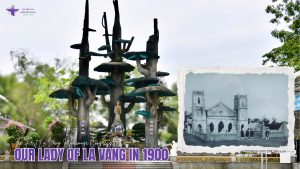
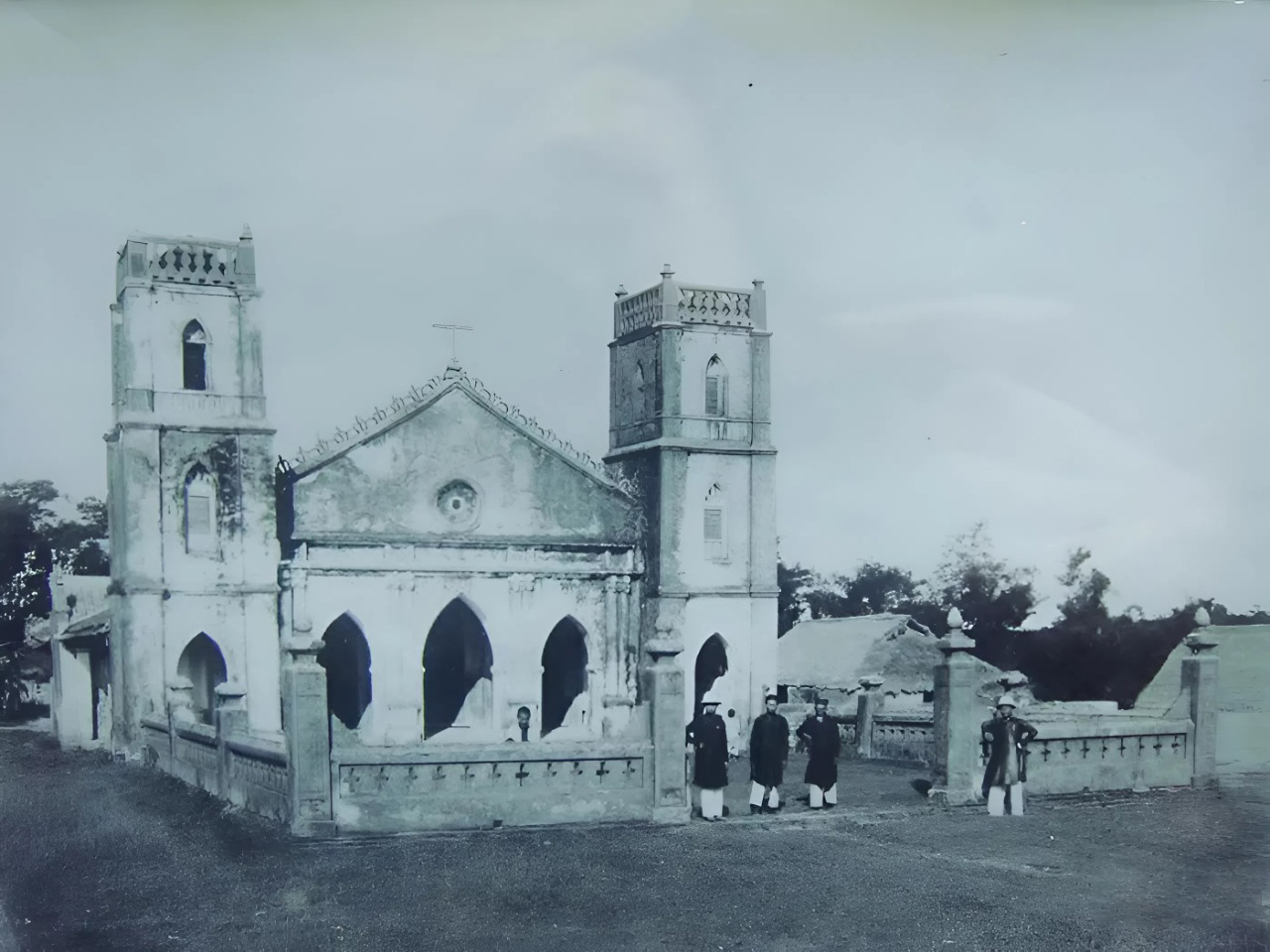 The Historic Ngói Church – Photo: Archives of the Paris Foreign Missions Society (MEP)
As recorded by the Archdiocese of Hue, this was the first permanent tiled-roof church at La Vang. Its completion provided a dedicated place for the growing number of pilgrims gathering to honour Our Lady of La Vang.
Although the original Ngói Church no longer survives, it remains one of the most significant landmarks in the early history of the shrine.
3. Traditions Associated with the Year 1900
According to the historical study published by the Archdiocese of Hue, longstanding tradition associates the First La Vang Pilgrimage Congress with several important developments.
Bishop Caspar Lộc is traditionally remembered as dedicating the Ngói Church under the title Our Lady, Help of Christians.
The same tradition also attributes to him the establishment of:
- A pilgrimage congress every three years during the week of the Feast of Our Lady of the Snows; and
- The annual Minh Niên Procession, held on the third day of the Lunar New Year.
These traditions have remained an integral part of the pilgrimage life of Our Lady of La Vang.
4. Historical Relics Associated with the First Congress
4.1 The First Statue of Our Lady of La Vang
For the inauguration of the Ngói Church, Bishop Caspar Lộc placed a new statue of Our Lady of La Vang, modelled after Mary, Queen of Victory.
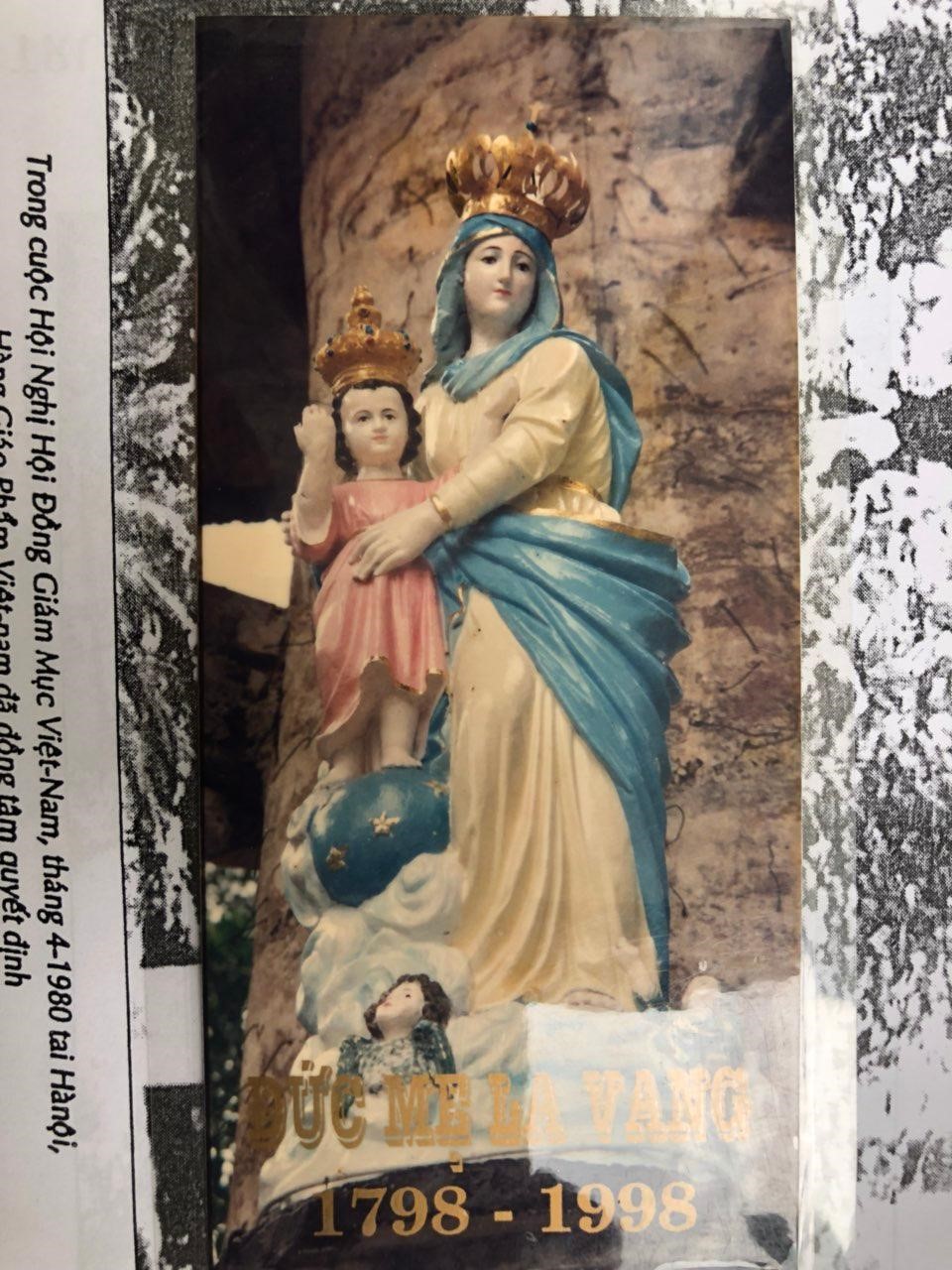 Statue of Our Lady of La Vang: Modelled after Our Lady, Queen of Victory
Historical descriptions preserved by the Archdiocese of Hue portray the Blessed Virgin wearing a white robe beneath a blue mantle and a golden crown. Beside her stood the Christ Child, also crowned, extending His hand towards the faithful while remaining close to His Mother. The image expressed Mary’s maternal role in leading believers to Christ.
The original statue remained at La Vang until it was destroyed during the conflict of 1972.
4.2 Our Lady’s Well
Although constructed in 1903, Our Lady’s Well is closely connected with the history of the Ngói Church.
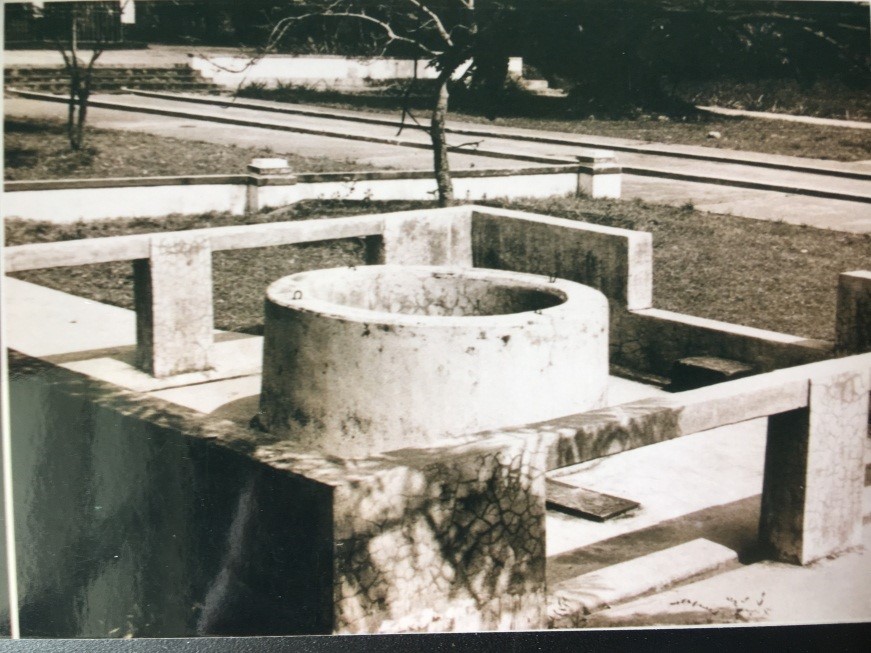 Our Lady’s Well – Photo: La Vang Heritage House
According to the Archdiocese of Hue, Father Joseph Nguyễn Xuân Cảnh had the well dug in front of the church while caring for the shrine grounds.
Today, the well is carefully preserved within the pilgrimage complex and remains one of the few surviving landmarks associated with the early twentieth-century history of Our Lady of La Vang.
The events of La Vang in 1900 laid the foundation for the organised pilgrimage tradition at Our Lady of La Vang. The First Pilgrimage Congress, the inauguration of the Ngói Church, and the traditions associated with this historic gathering continue to the events of 1900 marked the beginning of La Vang as an organised national pilgrimage centre. They shaped many of the devotional traditions that continue today, linking modern pilgrims with more than a century of Vietnamese Catholic history.
More than 125 years after the First La Vang Pilgrimage Congress, pilgrims from across Vietnam and around the world continue to gather at Our Lady of La Vang in faith and devotion.
If you are planning to visit La Vang, don’t miss the 32nd National Marian Pilgrimage Congress (13–15 August 2026)—a unique opportunity to experience one of Vietnam’s largest Catholic pilgrimages and walk in the footsteps of generations of faithful.
Discover the complete La Vang Pilgrimage Congress 2026 programme here: La Vang Pilgrimage Congress 2026
Vietnam Catholic Tours