Maries & the Story of Lepironia Grass in Hue – A Unique Handicraft Experience
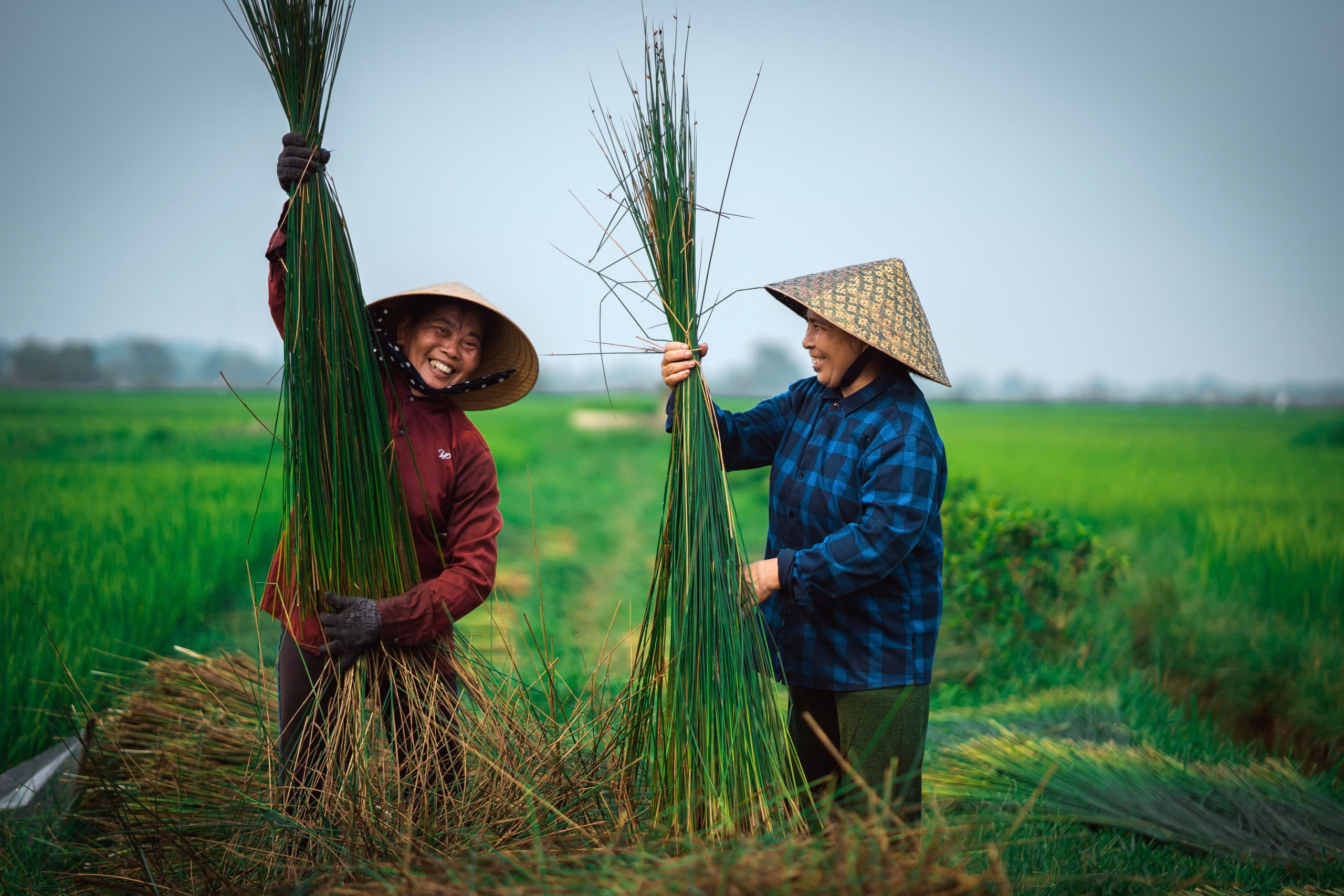
When mentioning Hue, people often think of ancient citadels, royal tombs, and poetic rivers. But behind those famous landmarks lies a quieter, more authentic story – the story of the Pho Trach Lepironia grass craft village, beautifully revived by Maries.
At Maries, tradition is not only preserved but brought to life in every handcrafted detail. Let’s discover the handicraft story behind Maries and discover a unique side of Hue.
1. The Story of Lepironia Grass in Hue
Nestled along the gentle O Lau River, before it flows into the vast Tam Giang Lagoon, lies a small village called Pho Trach or as locals affectionately call it Pho Trach Dem.
Located in Hue City, this village has existed for nearly 500 years, dating back to the southward expansion of the Nguyen Lords. Through countless changes of history and nature, Pho Trach has maintained a slow, peaceful rhythm of life, even though it faces seasonal floods year after year.
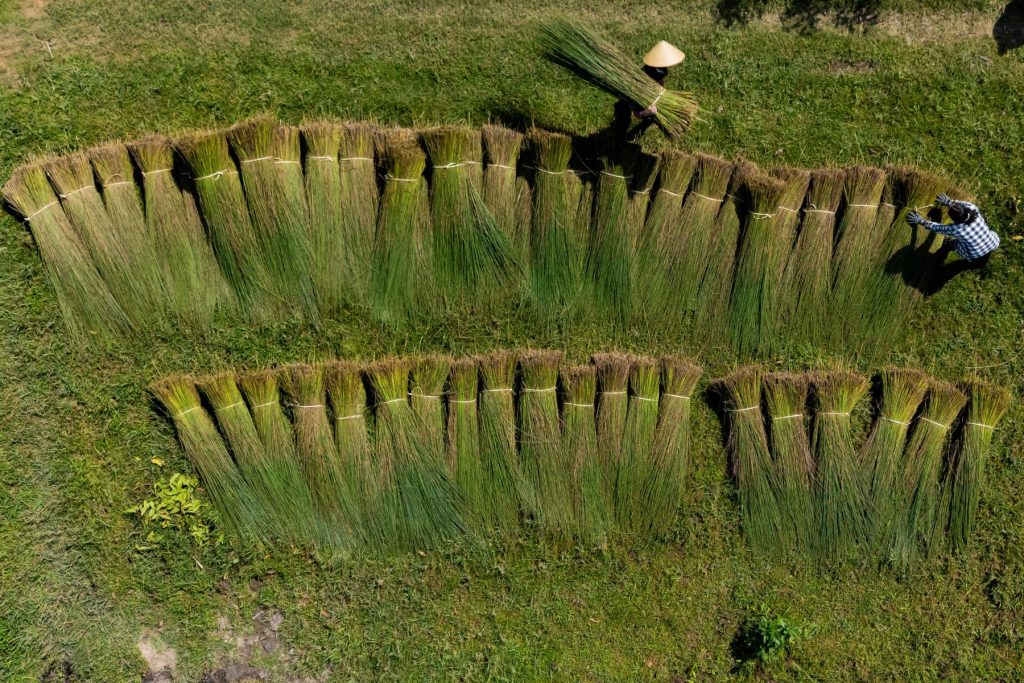
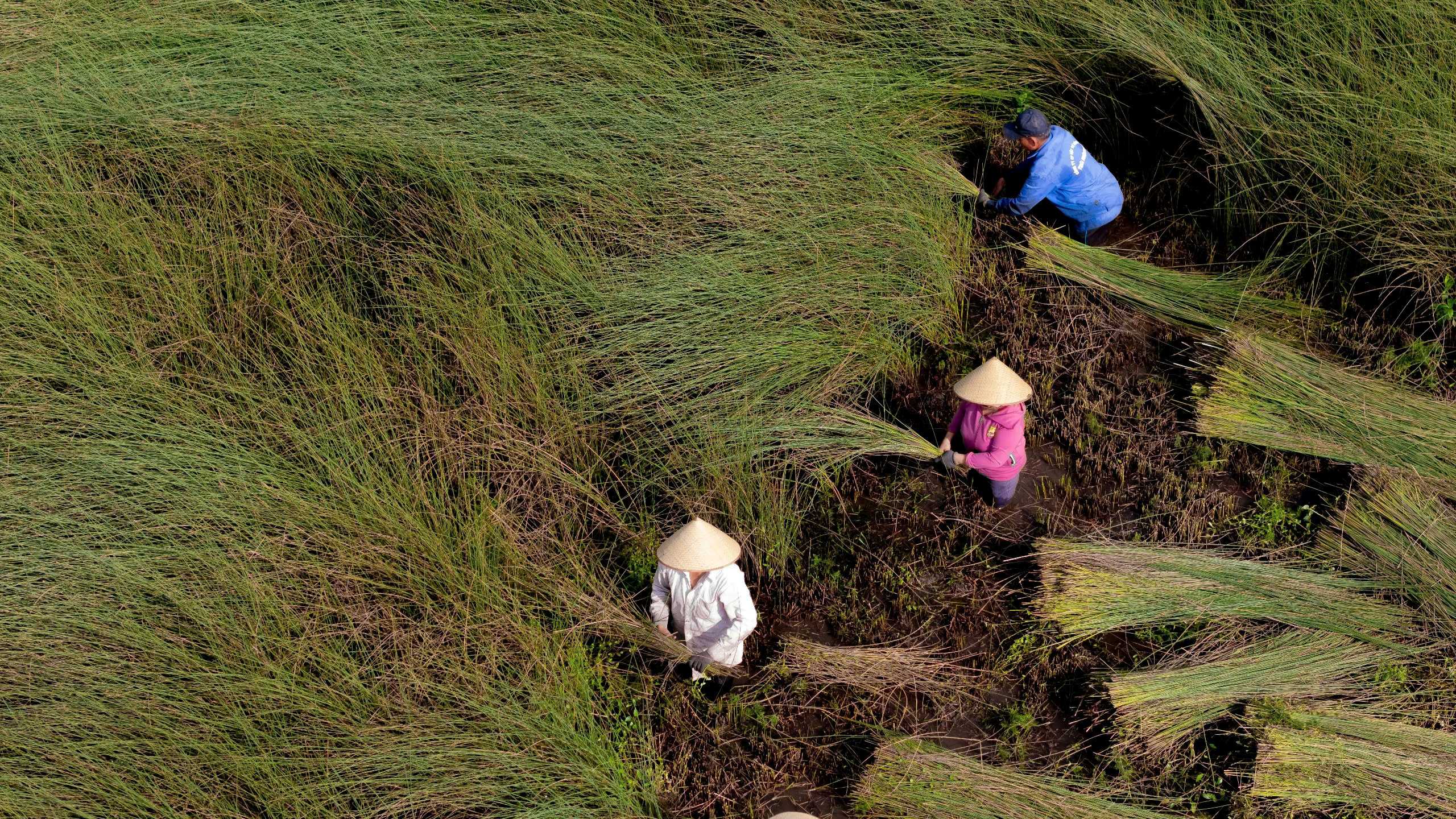
Yet from this land of challenges, a unique traditional craft has been preserved through generations: the art of weaving from Lepironia grass. Lepironia grass in Hue is unlike any other. While northern sedge grass often has a spongy core, and southern Lepironia grass is thicker, Hue’s Lepironia grass has a very refined characteristic: slender stems, about 0.4 cm in diameter, hollow inside and without any spongy layer.
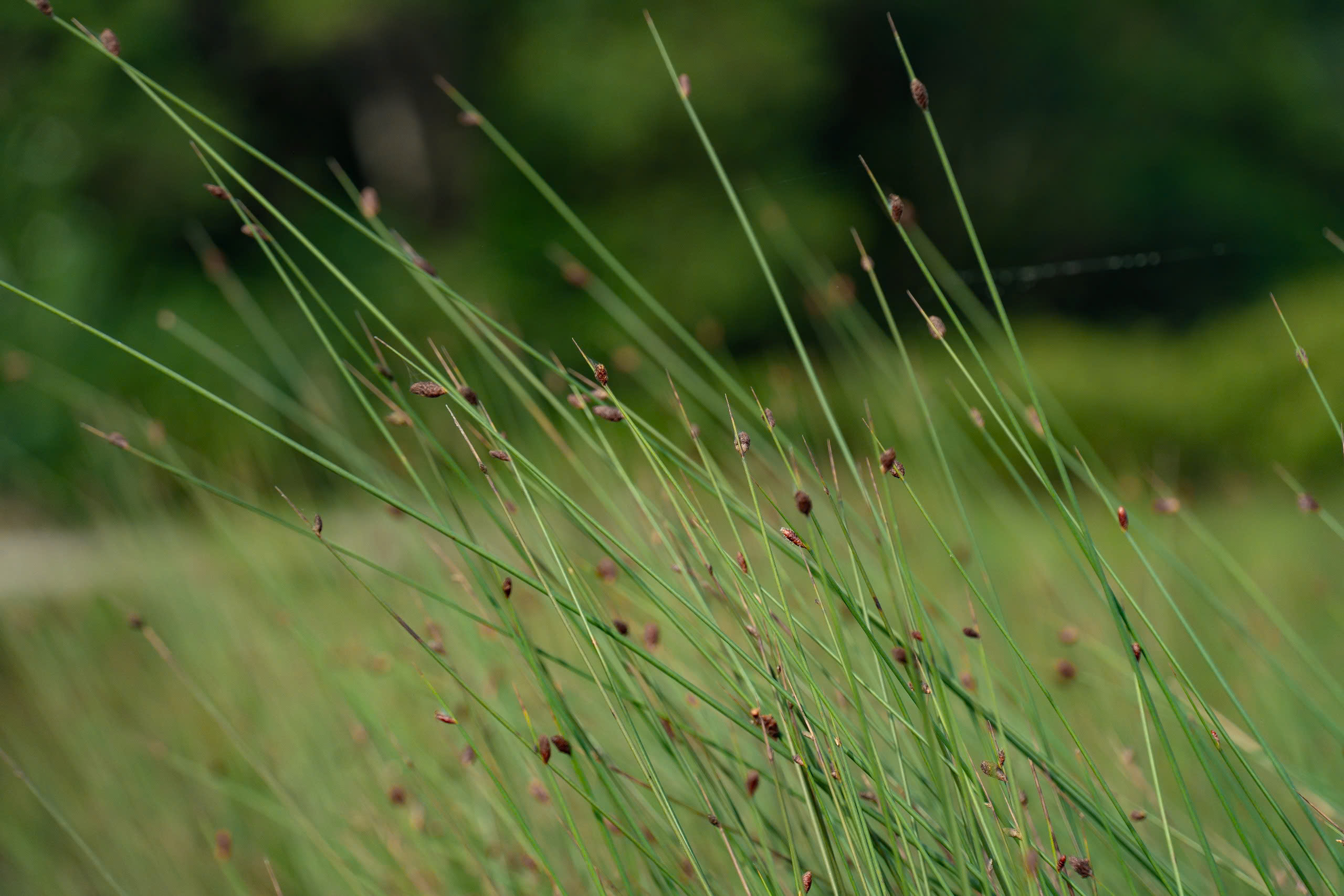
These differences create products with a very distinct beauty: light and delicate weaving patterns, low moisture absorption that prevents mold, and a soft, refined finish when crafted into bags, conical hats, and other handmade items. Each product is not just an object, but a result of skill, patience, and the deep love for the craft of local artisans.
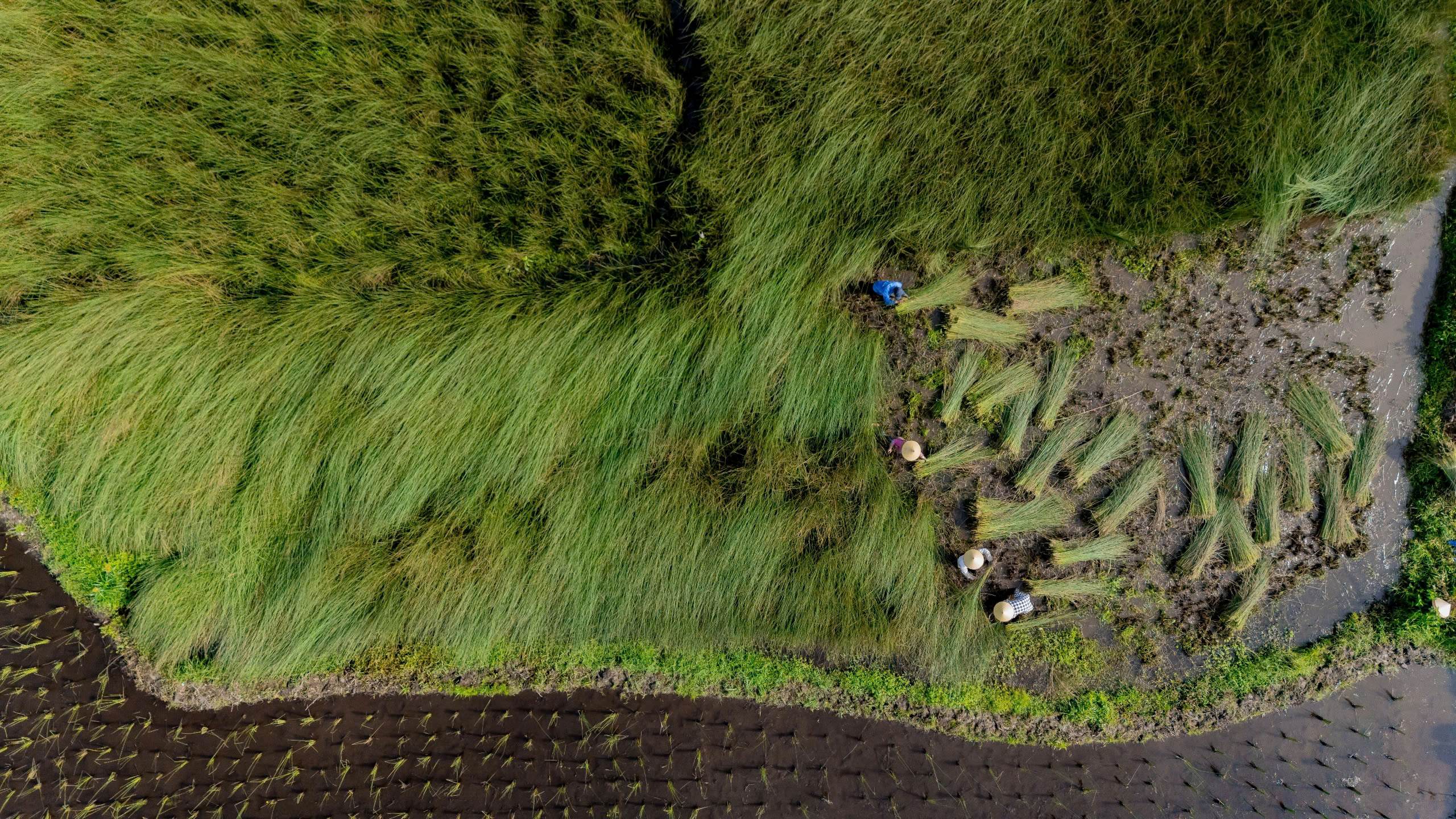
However, like many traditional craft villages, Pho Trach faces significant challenges. As market demands evolve, local handmade products sometimes struggle to keep up with modern trends. The risk of losing this traditional craft is gradually becoming more apparent.
Even so, in every small home within the village, the women of Pho Trach continue to work tirelessly with each strand of Lepironia grass – preserving memories, preserving the craft, and preserving the identity of their homeland.
2. The Lepironia Grass Thread Named MARIES
In 2021, when the world slowed down due to the Covid-19 pandemic – in Hue, a handicraft brand called Maries was quietly born. It did not begin with grand ambitions, but from a simple belief: the traditional values of Hue will always have a place in modern life if they are preserved and told in a more refined way.

Behind this journey is Ms. Ho Thi Suong Lan – CEO and founder of Maries, a woman who deeply understands the lives of craft village women. To her, the hands that weave are not only creating products, but also carrying many roles in life as mothers, wives, keepers of the home, and guardians of traditional craft, while still aspiring to work, to create, and to earn a meaningful livelihood.
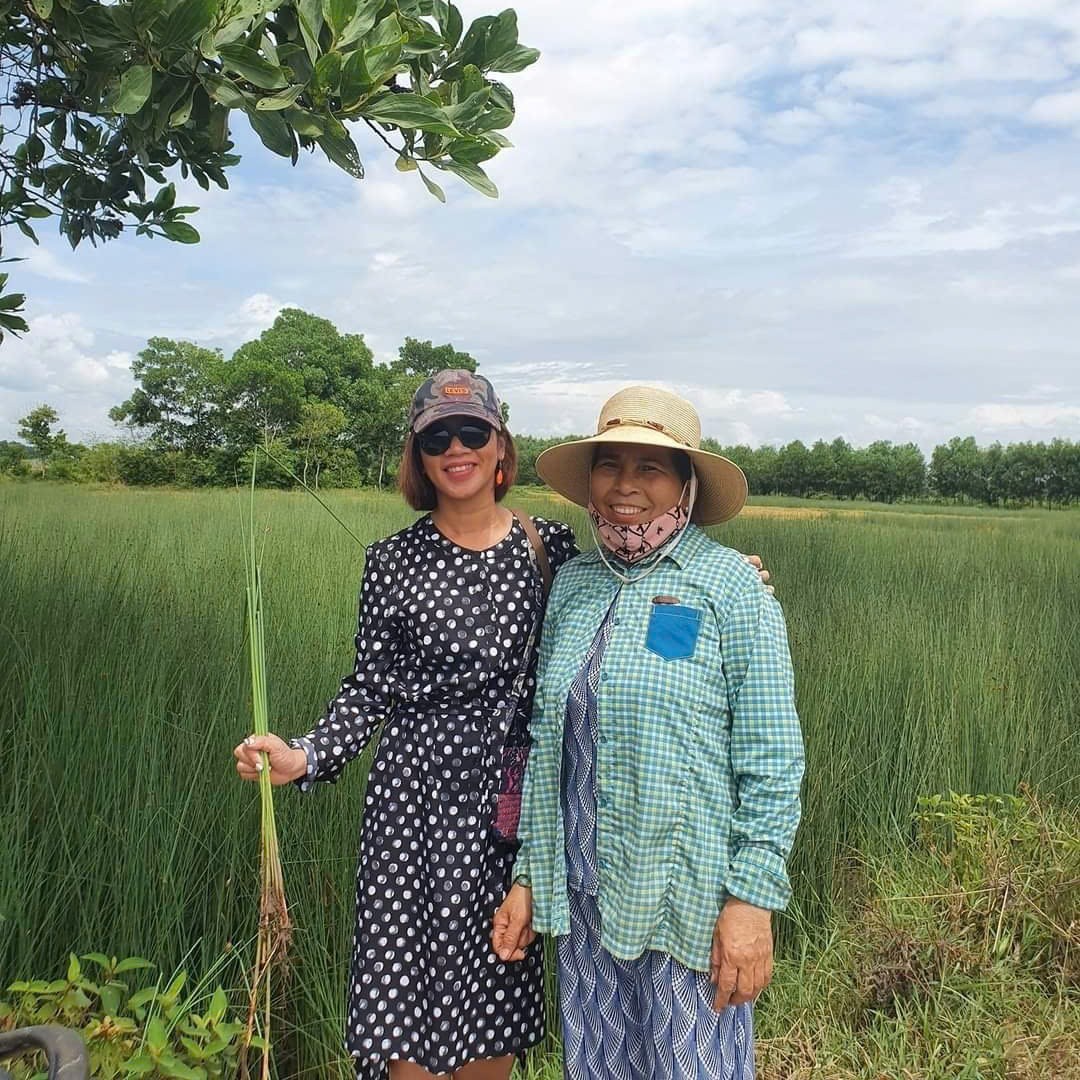
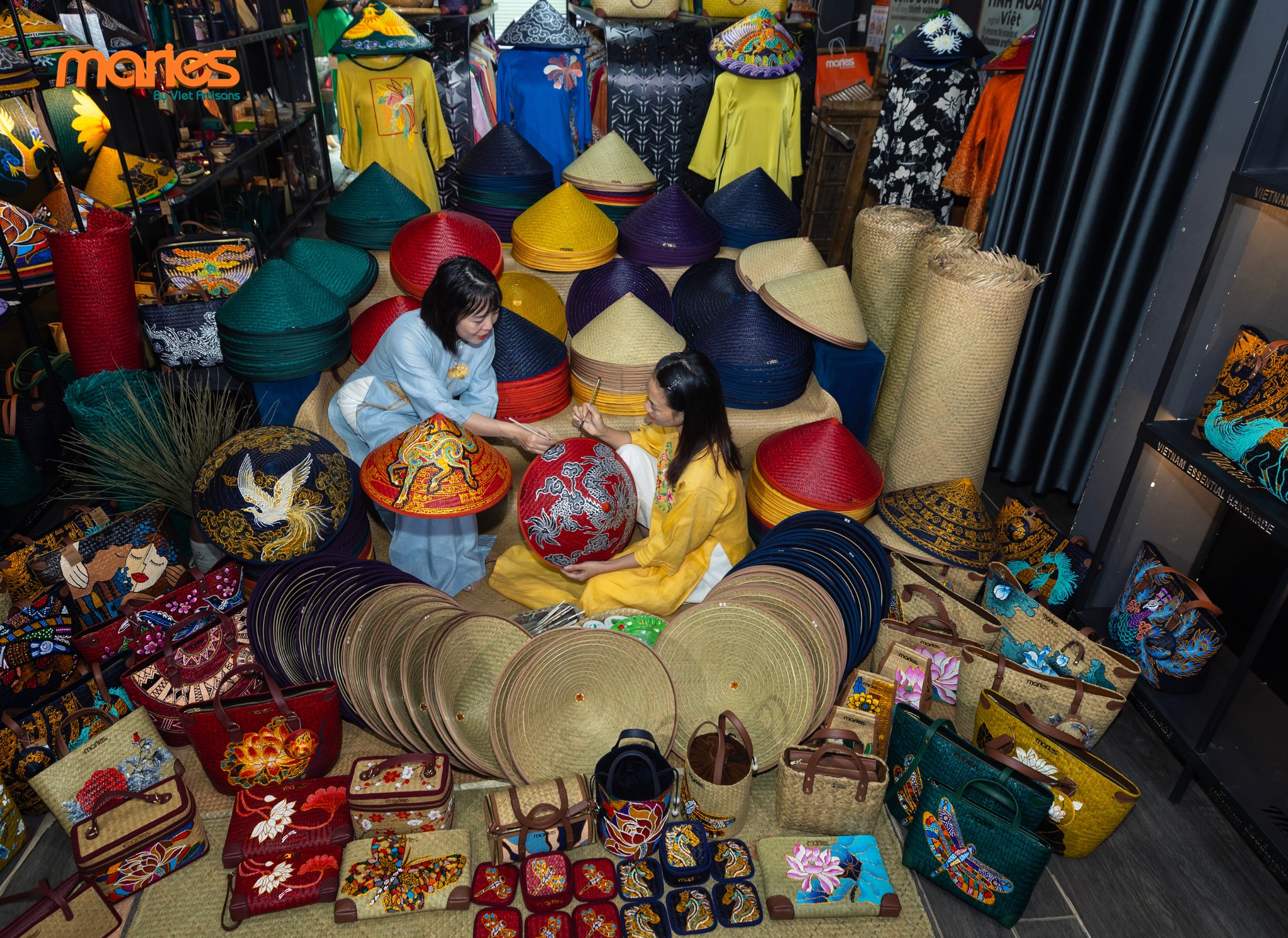
From the familiar material of Lepironia grass, Maries has gradually created products with high practicality such as bags, hats, caps, and wallets, combining both traditional and modern elements. All are handmade through a closed production process, preserving the true spirit of the craft village. But what defines Maries is not only the product, but also the people behind it – the women of Hue who have been connected to this craft for generations.
From this deep empathy, a mission has gradually taken shape. Maries does not only aim to create beautiful products, but also strives to elevate the role and voice of local women, inspire pride in their communities, and build a more sustainable future. A future where traditional crafts continue to thrive in their homeland, and where every woman contributes to creating “happy homes – prosperous villages.”
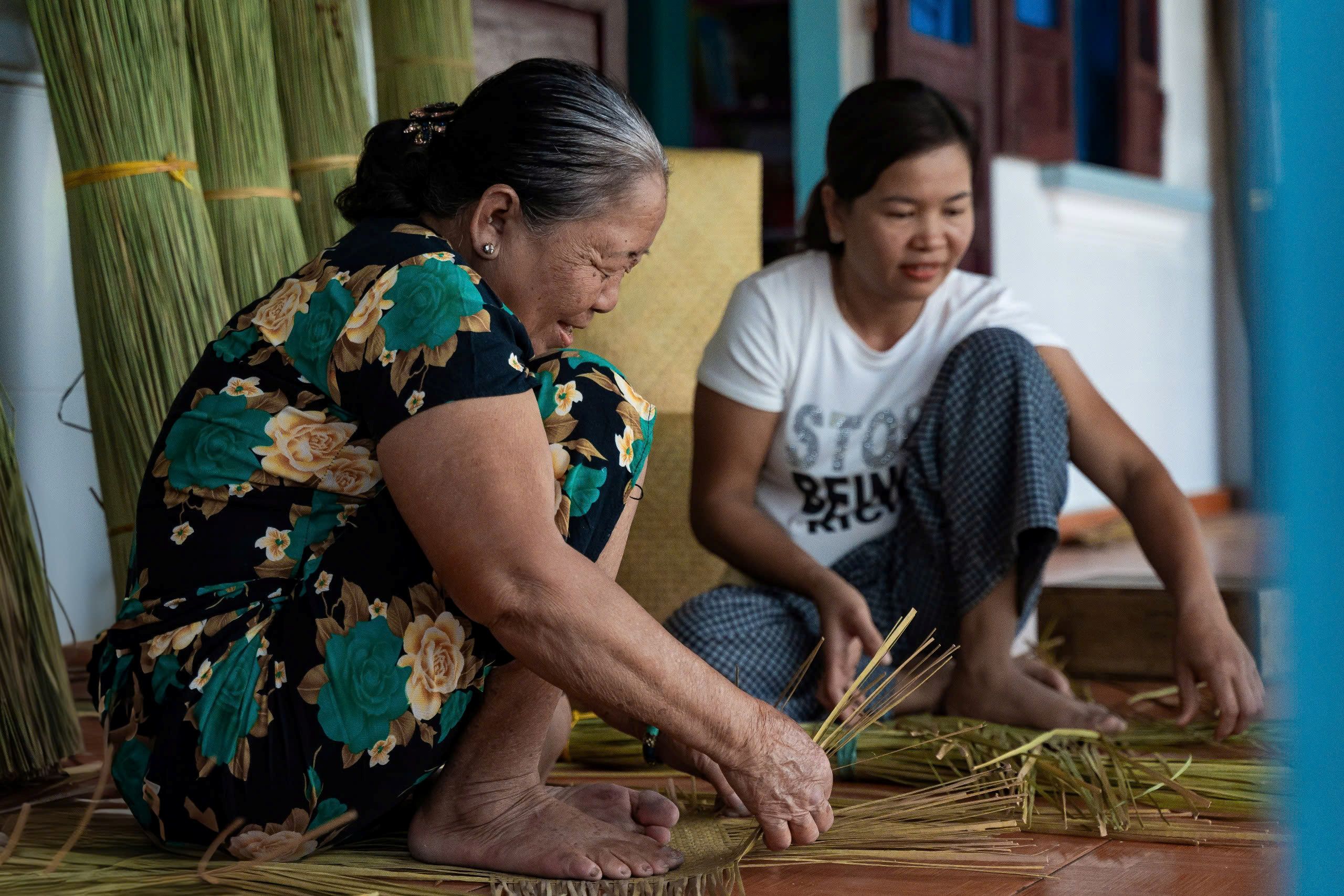
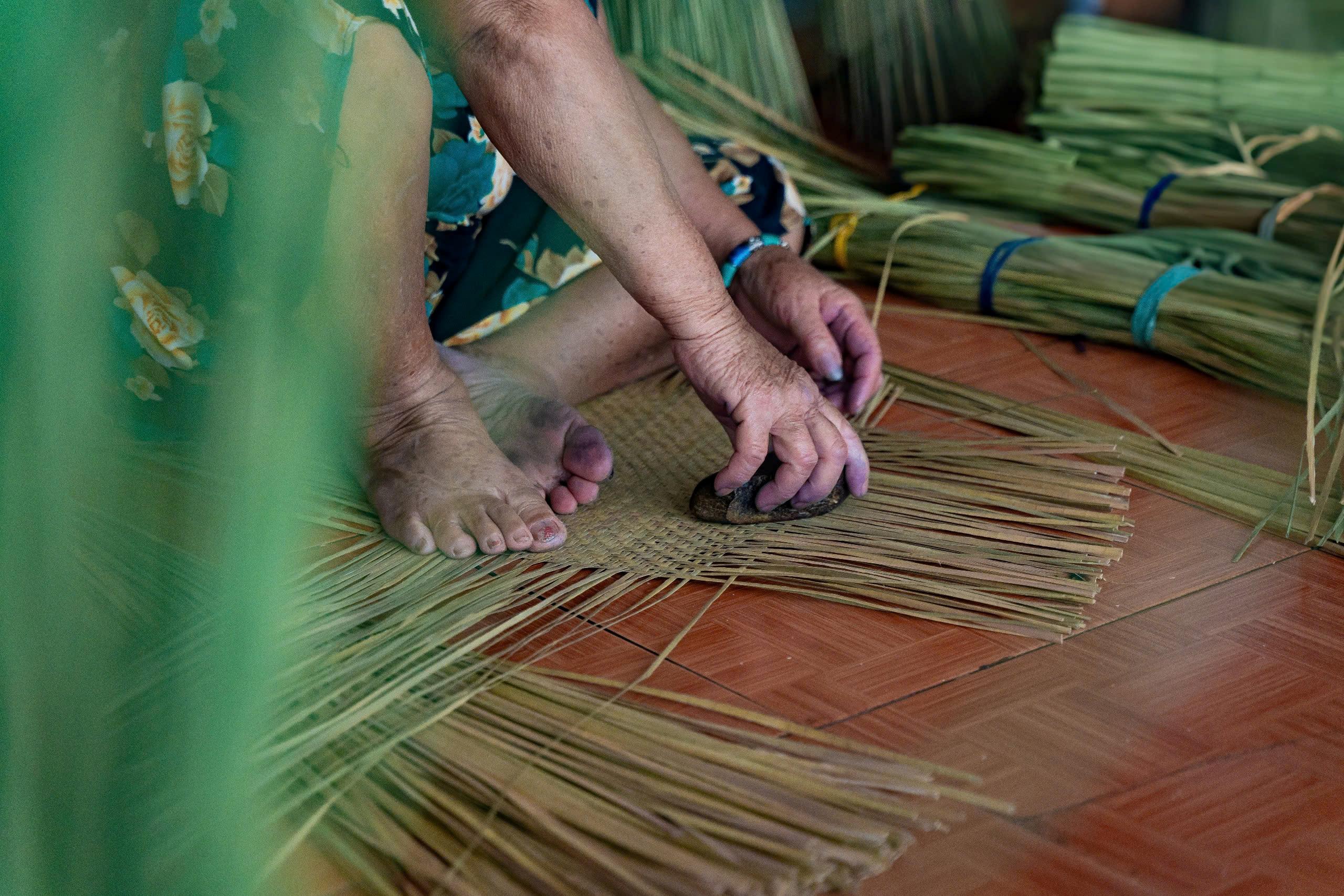
Maries, therefore, is not just a brand, but a place where Lepironia grass is woven with stories, people, and hope. You can explore more about the story of Maries on their official website: Maries – By Viet Artisans
3. Experience at Maries – Touching Hue’s Culture in a Unique Way
If the story of Lepironia grass begins in the village, and Maries is where its value is preserved and elevated, then the journey of travelers to Hue, Vietnam becomes complete when they truly experience Maries.
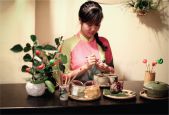
Located in a small space at 46 Chu Van An Street, in the heart of Hue, Maries is not just a showroom, but more like a “living art workshop.” Here, visitors can pause, observe, and feel each stage of the handmade process unfolding before their eyes.
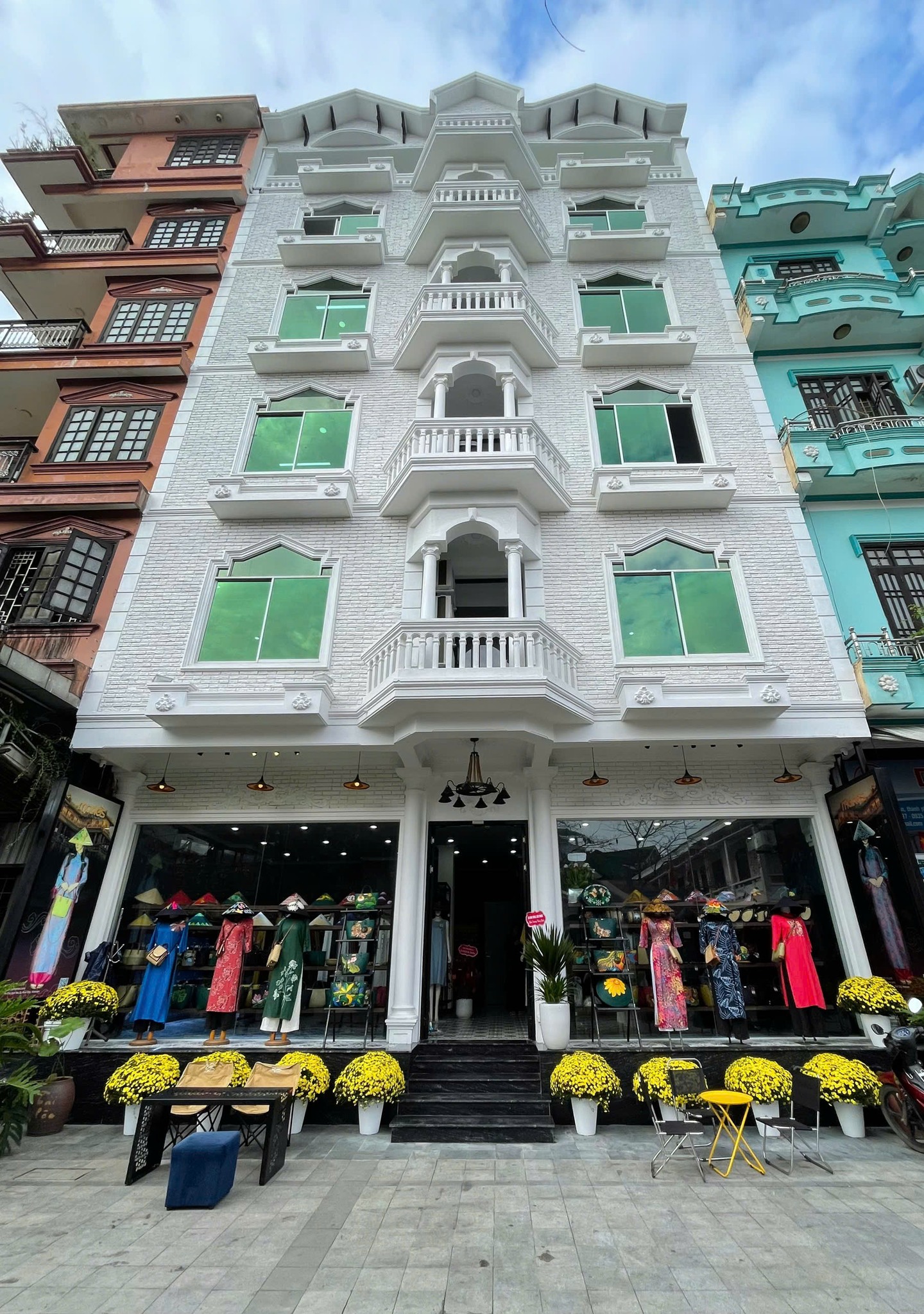
It is the moment when an artist carefully paints each stroke onto a conical hat, transforming a familiar object into a unique piece of art. It is when raw strands of Lepironia grass are skillfully woven into form by patient and talented hands.
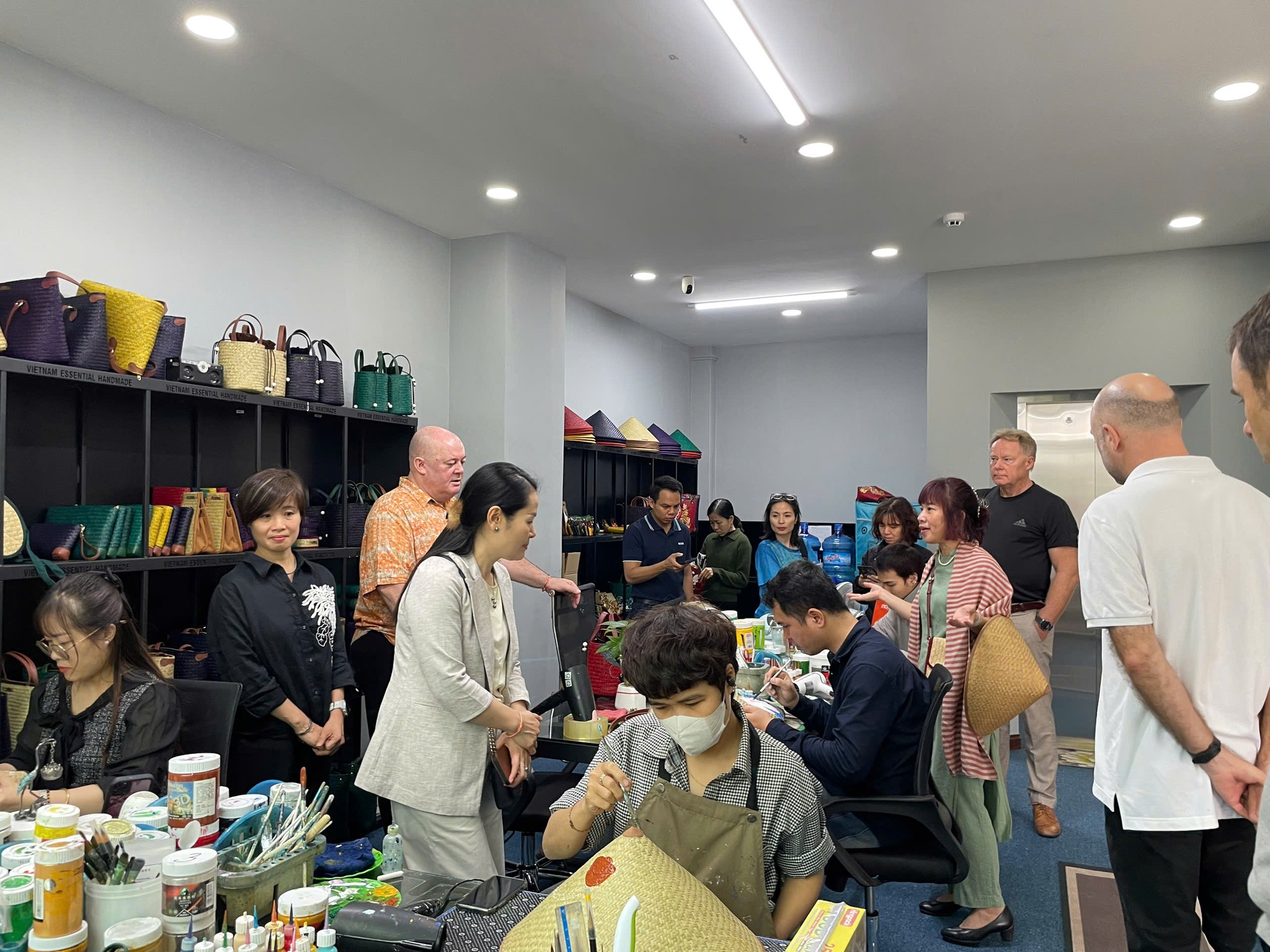
There is no industrial production line. No rush. Only focus, craftsmanship, and a very distinct rhythm of traditional handcraft brought to life in every product. For many travelers, this is not just a stop, but a memorable experience in their journey through Vietnam. Because they are not simply “buying a souvenir,” but bringing home a story or a memory of the people and culture they have encountered.
And that is exactly why Vietnam Catholic Tours has chosen Maries as a meaningful stop in our Hue local experience journeys. When our travelers quietly watch an artist paint each line on a traditional conical hat, or gently touch the raw Lepironia grass handicraft material while listening to the stories behind it, they are not just observing – they are experiencing an authentic Hue handicraft workshop and local cultural experience.
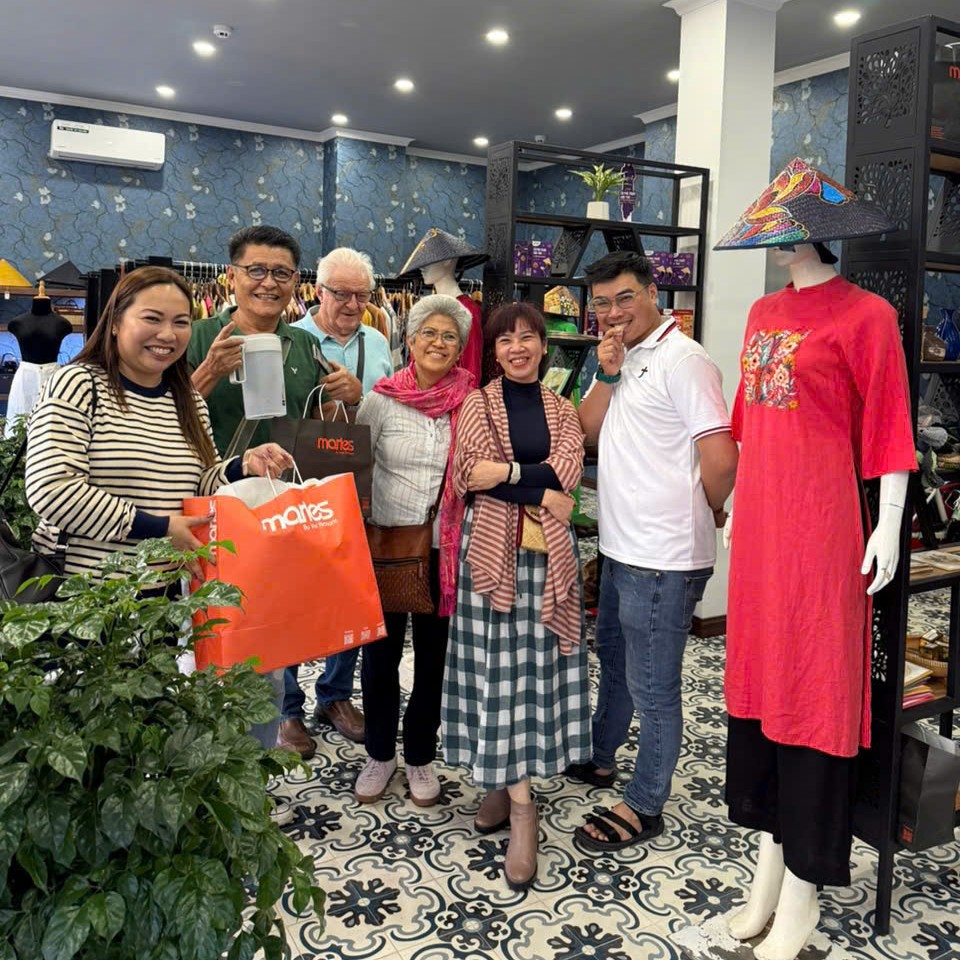 Visiting Maries during our travelers’ pilgrimage to Hue
By the time they leave Hue with a handmade souvenir from Maries, what they carry is more than a product. It is a memory shaped by Hue culture, local artisans, and traditional craftsmanship, something deeply personal that stays with them long after the journey ends.
At the same time, every visit creates a meaningful impact. By supporting Lepironia grass handicrafts in Hue, our travelers help sustain the livelihoods of local women Pho Trach village and contribute to preserving a traditional craft village in Vietnam for future generations.
For Vietnam Catholic Tours, a responsible and sustainable travel experience in Vietnam is not only about discovering new places, but about creating authentic cultural connections and positive impact travel. And Maries, in its own unique way, is exactly that kind of “touchpoint.”
Every visit to Maries helps support the livelihoods of women in Pho Trach village and contributes to preserving a traditional craft for future generations.
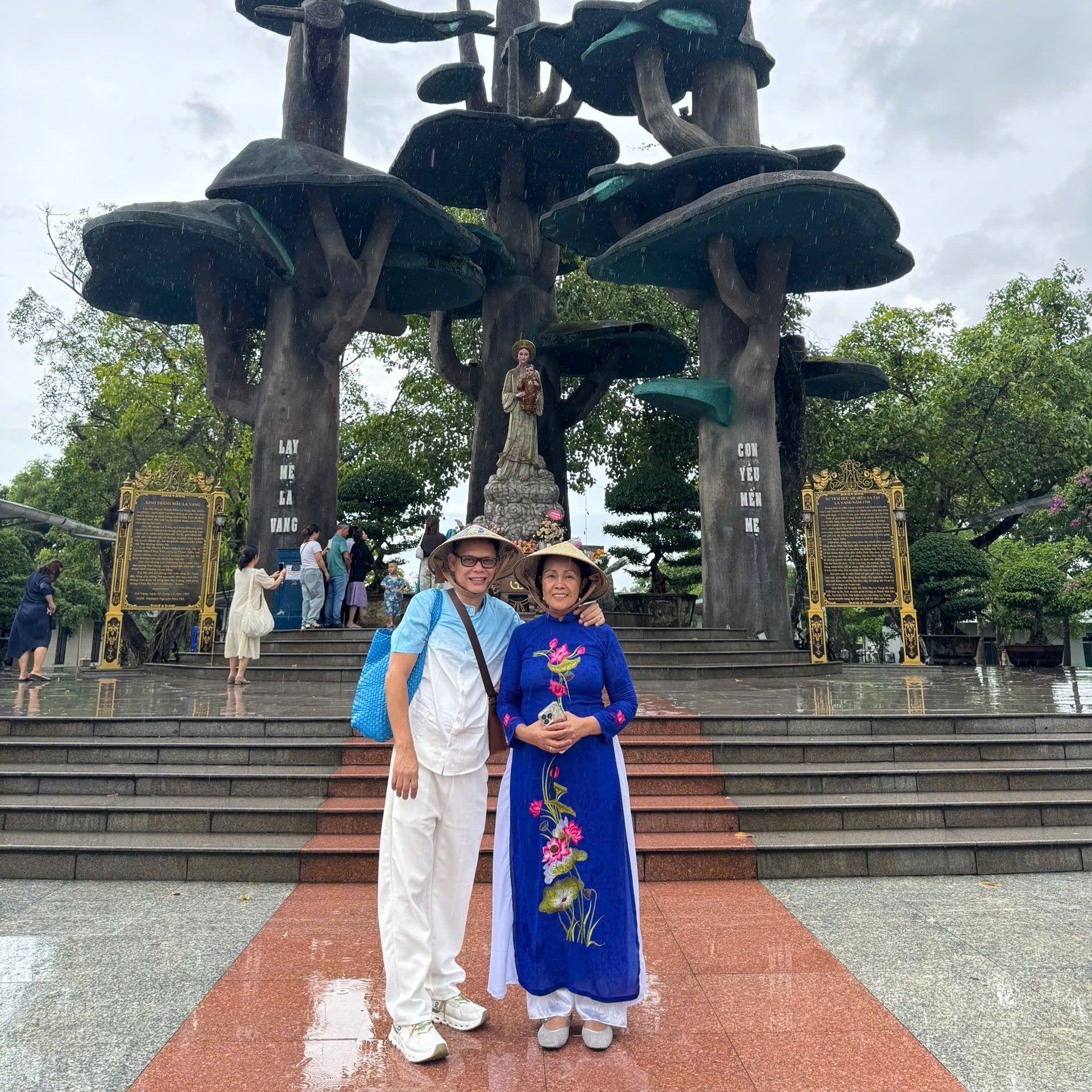
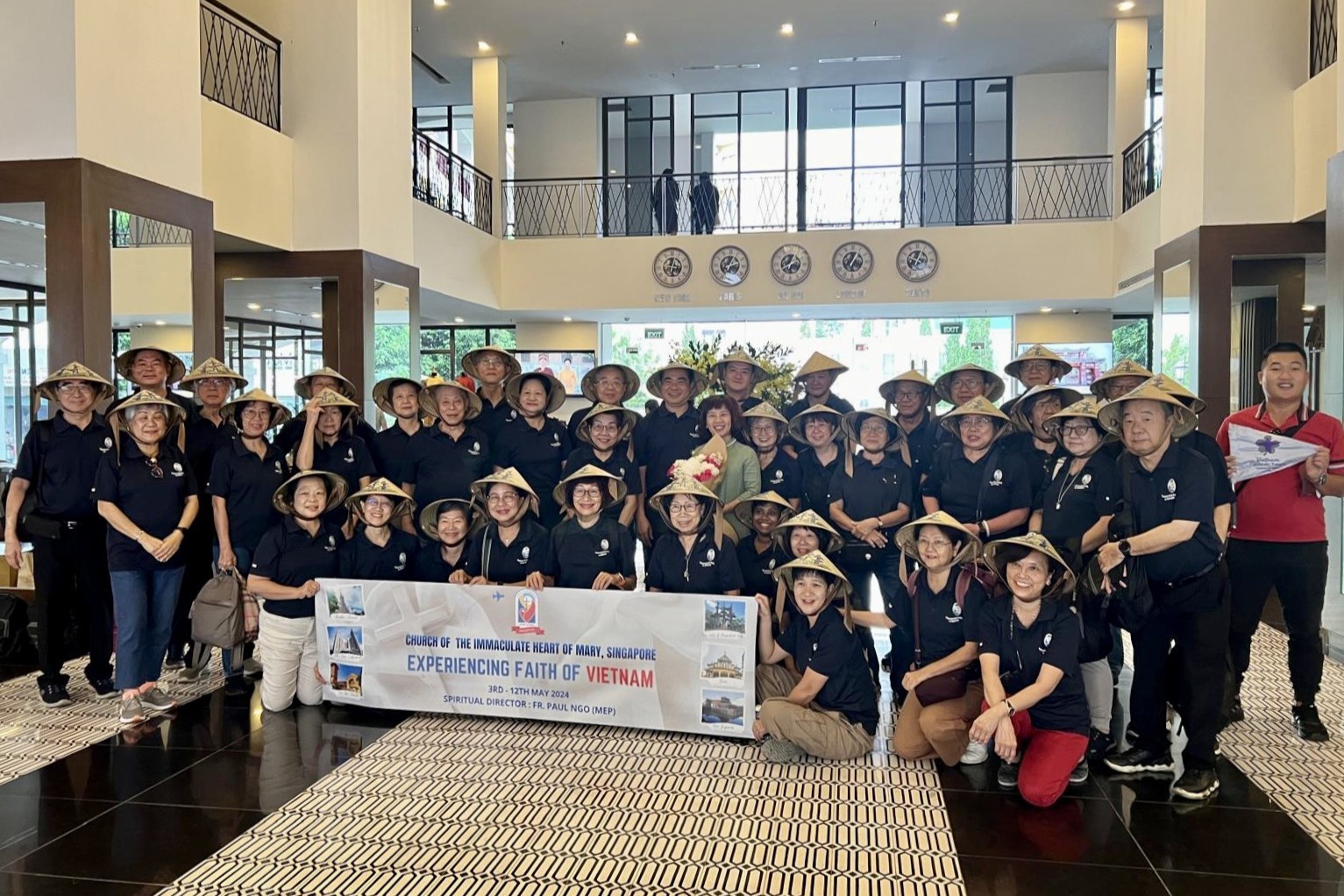
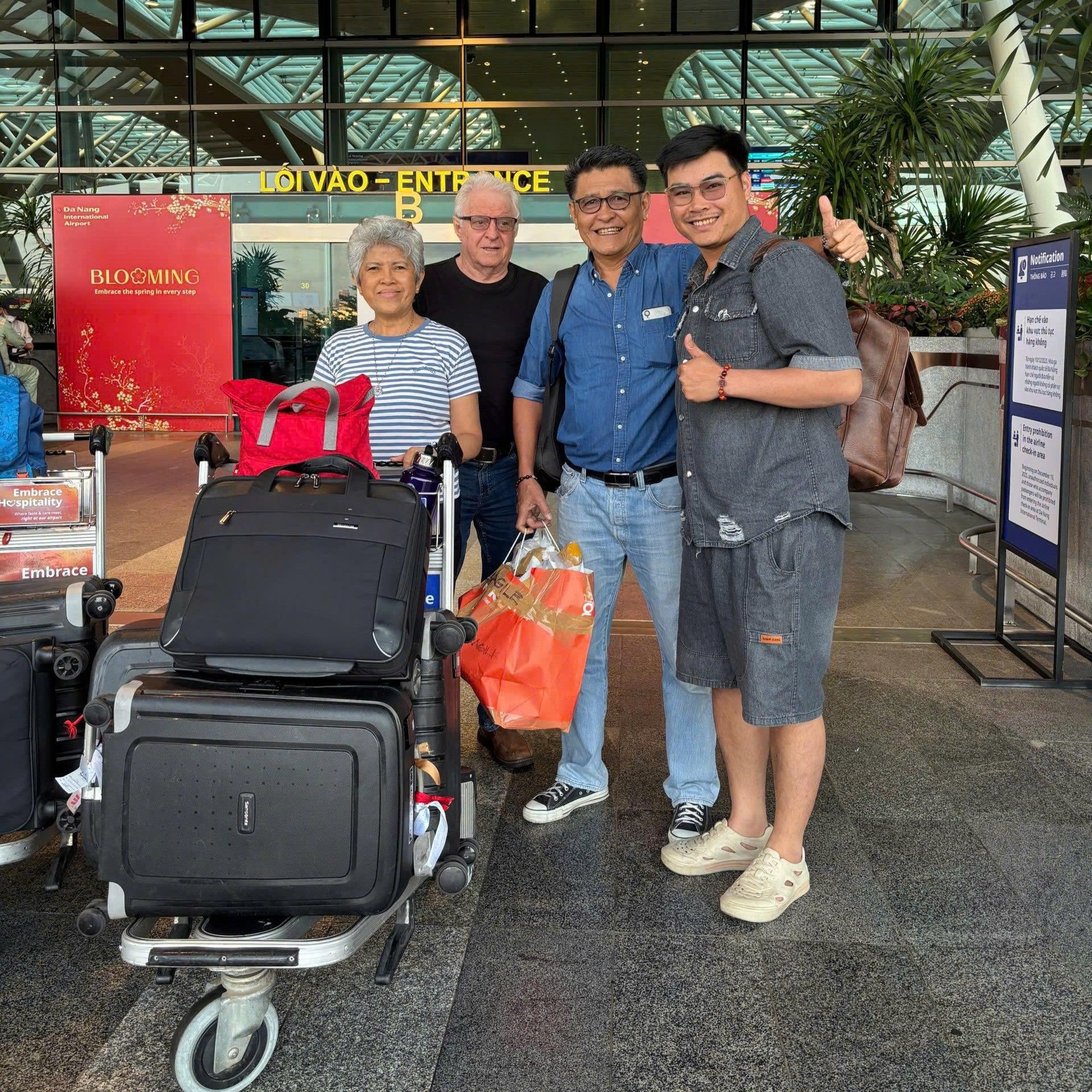
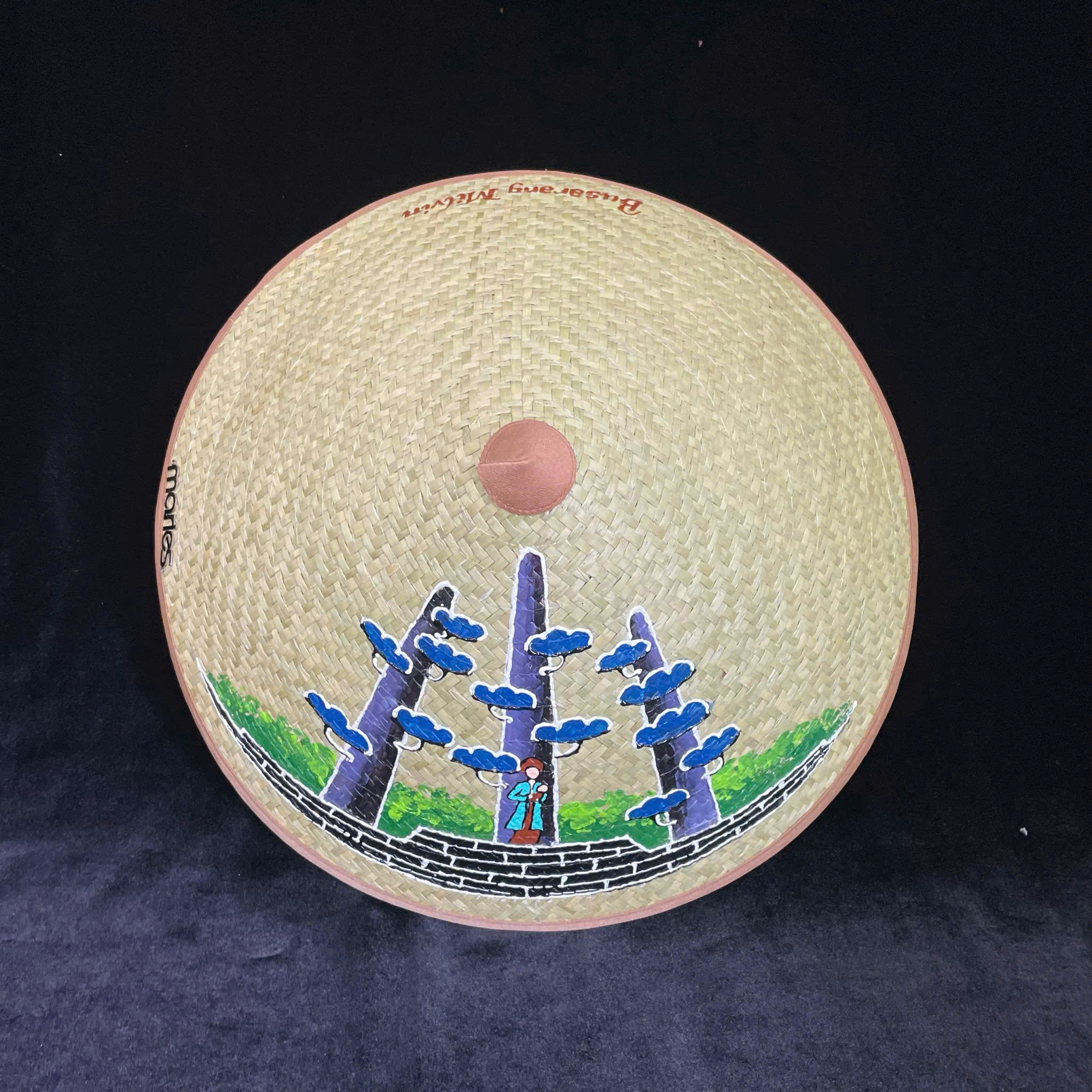 Maries hats are brought home by travelers after their journey with Vietnam Catholic Tours
If you’re looking for meaningful things to do in Hue, let Vietnam Catholic Tours guide you to authentic cultural experiences where every journey leaves a positive impact.
Vietnam Catholic Tours